

There’s something oddly comforting about knowing the size of everyday things. Like, genuinely comforting.
Maybe it’s because humans are tiny walking comparison-machines and we keep measuring life against pizza pans, door frames, and the random spoon drawer nobody ever organizes properely.
When someone says 1 foot, most people nod as if the brain instantly understands it, but honestly? Half the time we don’t really picture the actual length. We just pretend we do and move on with our day.
I remember my uncle a slightly dramatic carpenter who carried a pencil behind his ear like it was a royal duty telling me,
“Kid, if you can learn to see measurements without tools, you’ll never feel lost in a room.” At the time I thought he was talking nonsense from sawdust inhalation. Turns out he sorta had a point.
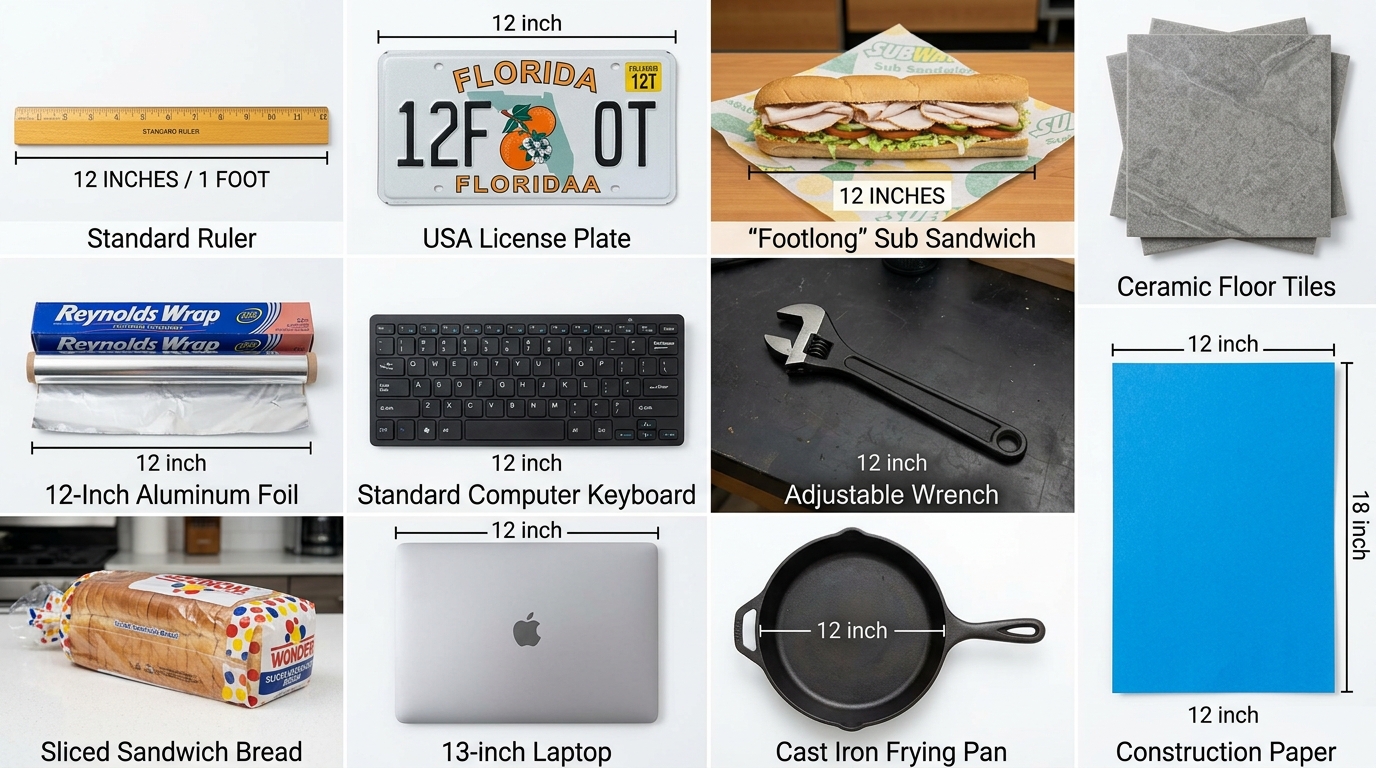
A Foot (ft) equals 12 inches or 30.48 centimeters, depending on whether your brain prefers the Imperial system or metric math that feels suspiciously cleaner.
But knowing that number isn’t the same as developing measurement intuition. That comes from connecting measurements to real-life stuff. To objects you touch, drop, lose under the couch, or accidentally whack against a cabinet.
This guide explores things that are 1 foot long, not in a dry textbook kinda way, but through familiar objects and human-scale comparisons that help with visual estimation,
DIY projects, cooking, teaching kids, decorating rooms, and those moments when you mutter, “Wait… how long is a foot again?”
And weirdly enough, once you start noticing everyday objects that are 12 inches, you can’t stop. Your brain turns into a walking tape measure. It’s mildly cursed but very useful.
| Item | Approximate Size |
|---|---|
| Standard ruler | Exactly 12 inches (1 foot) |
| Subway footlong sandwich | About 1 foot long |
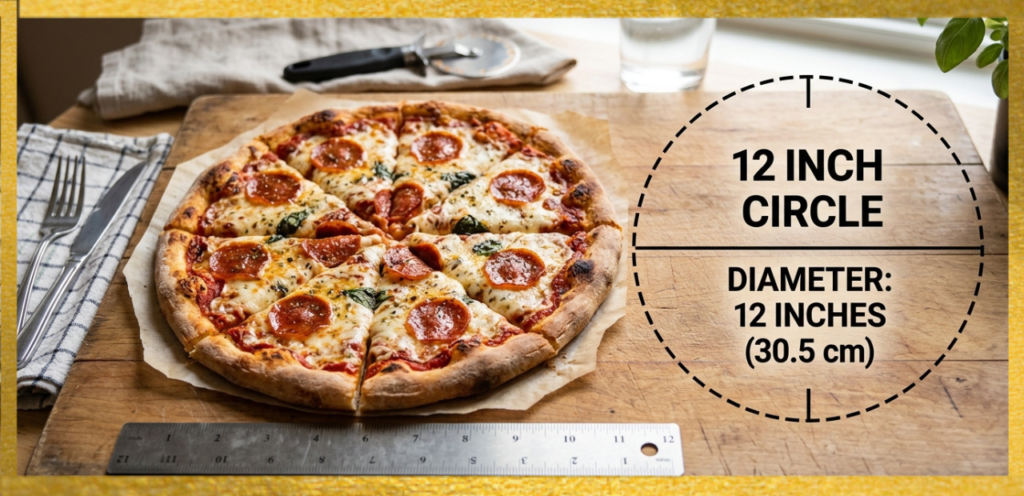
| Medium pizza | 12-inch diameter |
| Two-liter soda bottle | Around 1 foot tall |
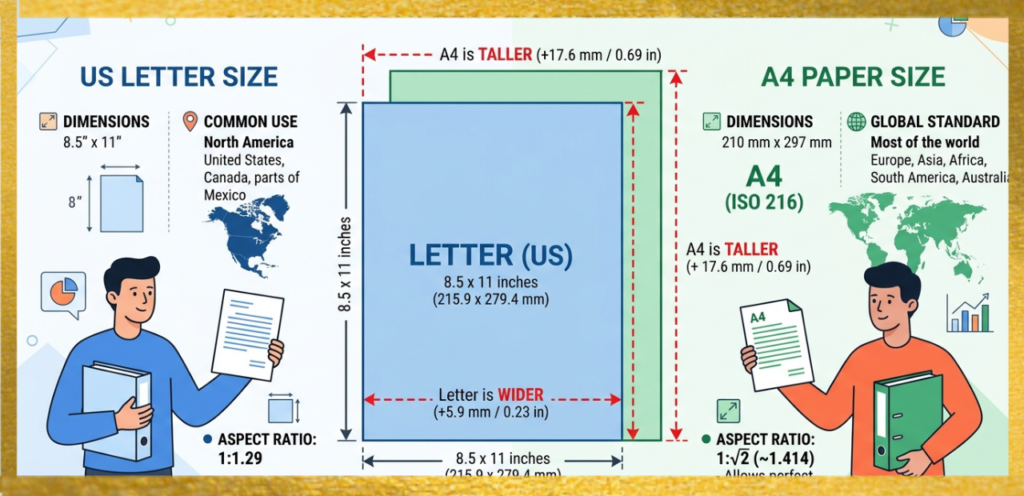
| Letter-size paper | 11 inches long |
| A4 paper | 11.7 inches long |
| Spatula | Around 12 inches long |
| Grill tongs | About 1 foot long |
| Pizza pan | 12-inch diameter |
| Cable tie (zip tie) | Common 12-inch size |
| Frying pan / skillet | Around 12 inches wide |
Why Understanding One Foot Matters in Everyday Life
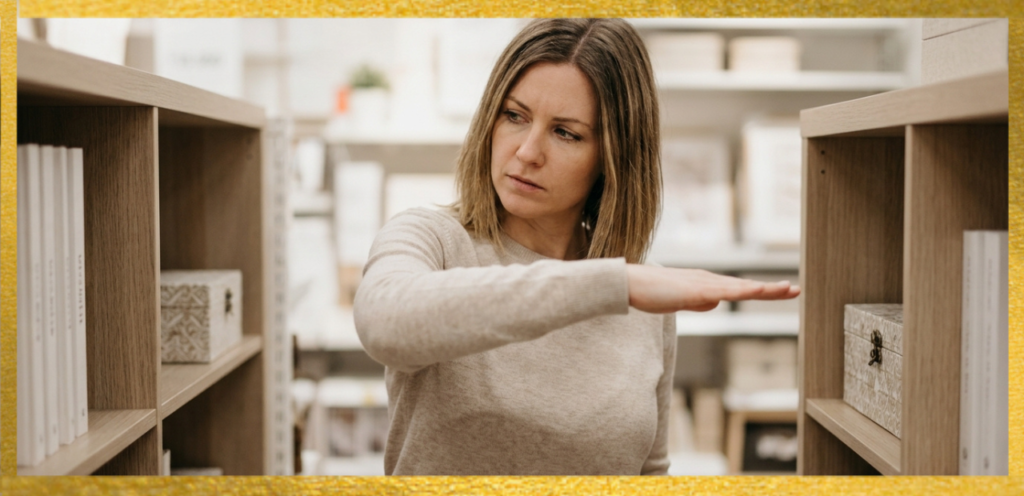
People underestimate how often they use practical measurement without realizing it. You eyeball shelf spacing. You guess drawer width.
You estimate whether a couch fits through a doorway and then spend forty minutes pivoting it like a sitcom character.That’s where measurement awareness sneaks into daily life.
Learning how long is 1 foot visually helps with:
- Rearranging furniture
- Buying storage bins online
- Hanging wall art evenly-ish
- Teaching children understanding measurements
- Estimating package dimensions
- Cooking and kitchen setup
- DIY home projects
- Gardening layouts
- Crafting and sewing
- Avoiding hilariously wrong purchases
A retired architect once said in an interview I read years ago, “Good design starts with human proportions.” I think about that every single time I buy a bookshelf online and it arrives looking smaller than emotional expectations.
The thing about visualize measurements is that your brain remembers objects better than numbers. Numbers float away. But pizzas? Sandwiches? Rulers? Those stick around forever.
The Standard Ruler The Classic One-Foot Reference
If there’s a celebrity in the world of standard measurement, it’s the humble standard ruler.
Most rulers used in schools and offices are exactly 12 inches, making them the easiest visual length reference imaginable.
Whether it’s a wood ruler, plastic ruler, or shiny metal ruler, they all quietly teach generations what one foot looks like.
There’s something almost nostalgic about rulers. The scratched edges. The faded ink. That one kid in school who used it as a fake sword for reasons nobody fully understood.
A ruler is especially useful because it offers:
- Straight-line exact measurement
- A built-in measurement comparison
- Easy estimating length
- Portable measurement without tools training
- Educational support for kids
Teachers often use rulers for visual learning measurements because children remember tangible objects more effectively than abstract numbers.
My niece once described a foot as “about the size of a sleepy squirrel,” which is scientifically useless but emotionally accurate somehow.
Subway Footlong Sandwich The Tastiest Way to Visualize a Foot
Few objects have done more for public spatial understanding than the legendary Subway footlong sandwich.
A Subway sandwich marketed as a footlong sandwich is intended to measure around 1 foot long, though the internet has argued passionately about exact bread dimensions for years now. Humanity truly is amazing.
Still, when people ask for examples of one foot in real life, this sandwich appears instantly in conversation.
Why it works as a measurement memory trick:
- Familiar shape
- Easy horizontal comparison
- Widely recognized
- Connected to hunger, which improves memory weirdly enough
And yes, there’s also the half-foot sandwich, which gives a neat six-inch mental benchmark too.
Honestly, food might be the greatest teacher of all measurement learning examples. Nobody forgets pizza or sandwiches.
Medium Pizza and the 12-Inch Circle
Now here’s where things get deliciously geometric.
A typical medium pizza often measures around 12-inch pizza size, meaning the diameter stretches roughly one foot across. That’s a perfect one-foot diameter example.
Suddenly, the measurement becomes easier to feel mentally.
You can picture:
- The roundness
- The box width
- The reach across the table
- The panic when someone takes the last slice
A pizza pan also commonly reflects this standard dimension. Even the pizza peel handle sometimes approaches similar lengths for maneuverability.
This is one of the best kitchen measurement examples because circular dimensions train your brain differently than straight rulers do. You begin recognizing volume, area, and spacing more naturally.
Also, measuring with pizza feels less like homework and more like survival.
Spatulas, Grill Tongs, and Kitchen Tools Around 12 Inches
Kitchens secretly teach measurement skills every single day.A standard spatula, especially larger cooking versions, often approaches or reaches 1 foot long when including the handle and blade together.
Same goes for grill tongs, which are designed for safe reach over heat.You don’t notice these dimensions consciously, but your hands remember them. That’s part of object scale recognition.
Common kitchen examples include:
- Spatula blades with long handles
- BBQ tongs
- Serving utensils
- Some carving knives
- Rolling pins
This creates an intuitive understanding of human-scale measurements because kitchen tools are handled constantly. Repetition builds subconscious accuracy.
My grandmother never used measuring tape much. She measured dough thickness with her fingers and guessed pan sizes by eye. Terrifyingly, she was almost always correct.
That’s the power of measurement intuition.
Two-Liter Soda Bottles Are Surprisingly Close
A two-liter soda bottle often stands close to a one-foot height, depending on the brand design. Whether it’s Coca-Cola, Pepsi, or another carbonated soft drink, the bottle becomes an easy vertical measuring reference.
This works great for:
- Vertical measurement
- Estimating cabinet heights
- Comparing shelf clearances
- Teaching kids dimensions
People remember bottle shapes instinctively. It’s part of everyday household familiarity.
If someone asks, “What does one foot look like?” you could literally point to a soda bottle and say, “About that tall-ish.”
Not scientific poetry, but effective.
Letter-Size Paper and A4 Paper Comparisons
Here’s one people often overlook.
A sheet of letter-size paper measures 11 inches on its longer side extremely close to 1 foot long. Meanwhile, A4 paper is slightly longer at about 11.7 inches.hat tiny difference actually teaches something important about accuracy vs approximation.
Sometimes an approximate measurement is perfectly fine.
Sometimes you need precision.
That distinction matters in:
- photocopying documents
- Design layouts
- Printing alignment
- Office organization
- Craft cutting
Office workers develop accidental measurement awareness because paper dimensions become visual anchors in the brain.
You stop thinking in inches and start thinking:
“Oh, that shelf is about one sheet-and-a-bit wide.”Brains are weird little translators.
Measuring Tape Housing and Construction Tools
Ask any carpenter about measuring by eye, and they’ll probably grin like they know secret wizardry.
Many measuring tape housing units themselves are roughly several inches long, while common tool spacing systems rely heavily on the one foot measurement examples builders memorize over years.
In construction, construction tools often use ergonomic sizing around the foot range:
- Tool handles
- Level segments
- Saw guides
- construction tool grips
This develops practical spatial awareness skills.
Builders constantly estimate:
- drawer depth
- bookshelf spacing
- Stud distances
- Counter lengths
Without pulling out a ruler every single second.
That’s where measuring without tools becomes almost artistic. Tiny errors matter though, and professionals understand the dance between approximation and precision better than anybody.
Cable Ties, Cords, and Zip Ties
This section sounds boring until you realize how often you interact with these things.
A larger cable tie or zip tie commonly comes in 12-inch versions. They’re used for organizing:
- cords
- Computer wires
- Garden fencing
- Packaging
- Workshop storage
These become sneaky everyday measurement reference tools.
You might think:
“That cable is about two zip-ties long.”Not official math, but very human math.
Our brains love comparison learning because it reduces abstract thinking into visual memory. That’s why object-based learning sticks harder than memorizing raw numbers.
Frying Pans and Skillet Dimensions
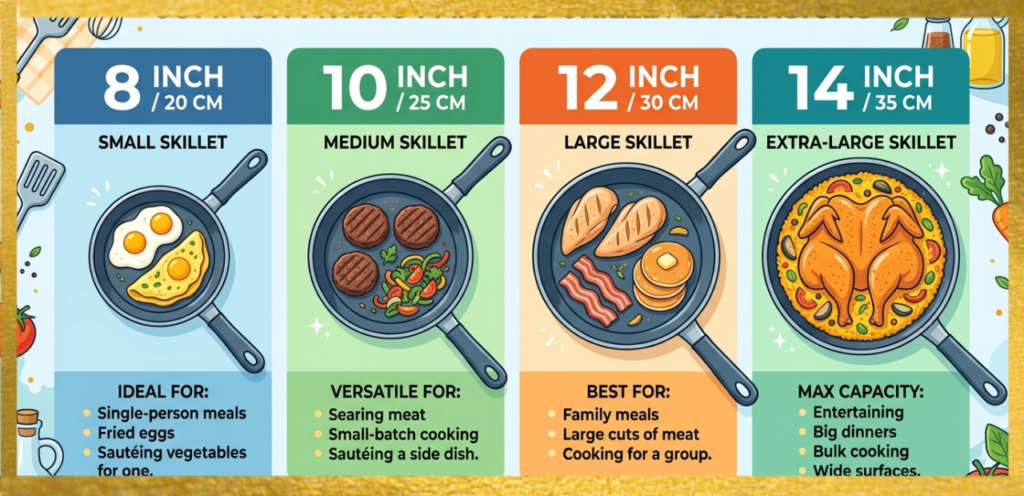
A standard frying pan or skillet frequently measures around 12 inches across at the top diameter.Again, that gives us a practical one-foot diameter example.
This matters more than people think because cooking depends heavily on spatial arrangement:
- Ingredient spacing
- Heat distribution
- Portion sizing
- Stove compatibility
A pan that’s one foot wide visually trains your understanding of circular dimensions. It’s one of the strongest real-world references for diameter estimation.
Also, people tend to underestimate circles. A 12-inch skillet looks bigger than expected when held in your hands. Human perception does funny little gymnastics with shape.
Mattress Dimensions and Furniture References
Certain crib mattresses, cushions, or sectional furniture components include segments roughly foot long in measurement.
This becomes useful when:
- Planning rooms
- Buying storage
- Checking doorway clearance
- Comparing décor sizes
The average person develops a mental catalog of sizes through repetition. Designers call this a kind of built-in proportional memory. I call it “guessing better after enough mistakes.”
Using household measurement reference objects improves:
- Interior planning
- DIY confidence
- Shopping accuracy
- Room flow understanding
And honestly? Everybody should know roughly what a foot looks like before buying shelves online. Saves heartbreak.
Dollar Bills and Stacked Measurement Tricks
A single US dollar bill isn’t one foot long it’s about 6 inches wide but two aligned together get very close to a foot.
This is one of those old-school length estimation tricks people actually used before smartphones and laser tools existed.
Funny enough, travelers and street vendors still use object comparisons like this worldwide.
Other improvised references include:
- Hand spans
- Shoe lengths
- Notebook widths
- Phone dimensions
It’s all part of measurement without tools and human adaptability.People have always estimated the world visually long before rulers existed.
Why Humans Learn Measurements Better Through Objects
There’s actual psychology behind this.
Our brains build stronger memory association through familiar physical items than abstract data alone. That’s why common objects 12 inches long become educational shortcuts.
Researchers in learning theory often note that visual anchoring improves recall. In simpler words: we remember pizzas better than numbers.
This method helps with:
- educational measurements
- Child learning
- DIY projects
- Design planning
- Navigation
- Crafting
Especially for children, asking them to visualize a foot using objects feels natural and fun rather than technical.
My niece still measures everything in “sandwich units,” which honestly deserves scientific recognition.
How to Estimate One Foot Without a Ruler
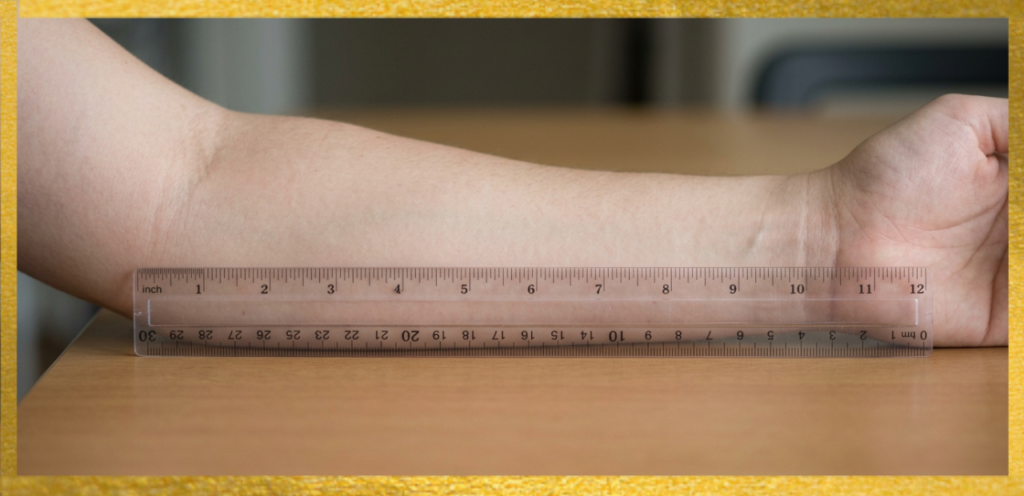
Here are practical ways people use measurement intuition daily:
- Compare against a standard ruler
- Picture a Subway footlong sandwich
- Imagine a medium pizza diameter
- Use a soda bottle height
- Think of a large skillet width
- Reference paper length visually
- Compare using hand spans
These methods improve:
- visual estimation
- DIY efficiency
- practical spatial awareness
- Confidence in estimating dimensions
And while these aren’t always perfect, they’re surprisingly effective for quick judgments.
That’s the balance between accuracy vs approximation. Sometimes you need millimeter precision.
Sometimes you just need to know whether the bookshelf will fit in the car without causing emotional damage.
Frequently Asked Question
Things That Are 1 Foot Long
Common things that are 1 foot long include a standard ruler, a footlong sandwich, a medium pizza, and a kitchen spatula. These everyday items help visualize a 12-inch length easily.
Things That Are 1 Foot
Many household objects measure about 1 foot in size, such as grill tongs, pizza pans, cable ties, and soda bottles. They are useful as quick visual measurement references.
1 Foot Example
A standard ruler is the best example of 1 foot because it measures exactly 12 inches in length. Other examples include a 12-inch pizza or a footlong sub sandwich.
How Much Is a Foot Long
A foot long equals 12 inches or 30.48 centimeters. It is a common unit of length used for measuring everyday objects and spaces.
One Foot Long
One foot long describes an object that measures 12 inches from one end to the other. Many common household and kitchen items are approximately one foot long.
Read this blog https://wittechys.com/8-inches-long/
Final Thoughts on Things That Are One Foot Long
Once you start recognizing common things that are 1 foot long, the world changes in tiny amusing ways. You stop seeing random objects and start seeing built-in rulers hiding in plain sight.
A pizza becomes geometry.
A sandwich becomes a lesson.
A spatula becomes a spatial-training device nobody signed up for.
That’s the beauty of everyday objects as measurement tools. They transform abstract numbers into lived experience.
And honestly, learning how to remember what one foot looks like isn’t about memorizing measurements. It’s about building familiarity with the physical world around you.
That quiet little skill improves cooking, decorating, building, shopping, crafting, and countless ordinary moments.
So next time someone asks, “How long is a foot?” don’t just say 12 inches or 30.48 centimeters.
Tell them it’s roughly the width of a pizza, the length of a ruler, the size of a footlong sandwich, and maybe if they’re lucky the beginning of finally understanding space with their own eyes a bit better.
And if you’ve got your own quirky everyday length reference, share it. Humans are endlessly inventive when it comes to measuring life using sandwiches and kitchen utensils. Frankly, I hope we never stop.