

Water bottle dimensions seem like a tiny detail right up until you’re trying to fit a new bottle into your car’s cup holder, bike cage, backpack pocket, or lunch bag. Then suddenly, height, diameter, and bottle capacity matter a lot.
Maybe you’re comparing a 500ml bottle to a 32 oz reusable water bottle. Maybe you’re designing product packaging. Or maybe you’re simply curious about what counts as a standard water bottle size.
Whatever brought you here, you’ll find the measurements, examples, and practical facts that actually matter.
| Water Bottle Size | Approx. Height | Approx. Diameter | Common Use |
|---|
| 250 ml | 15–18 cm (6–7 in) | 5–6 cm (2–2.4 in) | Kids, travel |
| 500 ml | 20–23 cm (8–9 in) | 6–7 cm (2.4–2.8 in) | Everyday hydration |
| 750 ml | 25–28 cm (10–11 in) | 7–8 cm (2.8–3.1 in) | Sports, gym |
| 1 Liter | 28–32 cm (11–12.5 in) | 8–9 cm (3.1–3.5 in) | Daily water intake |
| 1.5 Liter | 32–35 cm (12.5–14 in) | 9–10 cm (3.5–4 in) | Family or outdoor use |
What Are Water Bottle Dimensions?
Water bottle dimensions refer to the physical measurements of a bottle, including its height, diameter, width, and capacity. These measurements determine how much water a bottle holds and where it can comfortably fit.
When manufacturers list water bottle measurements, they usually focus on five key specifications:
Height
Height measures the distance from the bottom of the bottle to the top of the cap.
This measurement affects:
- Backpack storage
- Refrigerator shelf fit
- Ease of carrying
- Cup holder compatibility
Most everyday water bottles range from 6 to 12 inches tall.
Diameter
Diameter measures the width of the bottle’s circular body.
This is often the most important dimension because it determines whether the bottle will fit:
- Car cup holders
- Bike bottle cages
- Side backpack pockets
- Gym equipment holders
Width
Some bottles aren’t perfectly round. In those cases, manufacturers may provide width and depth measurements separately.
Square and rectangular hydration bottles often use this measurement system.
Capacity
Capacity indicates how much liquid the bottle can hold.
Common units include:
- Fluid ounces (oz)
- Milliliters (ml)
- Liters (L)
Bottle Cap Size
Bottle cap size affects drinking comfort and refill speed.
Common cap diameters include:
- 28 mm
- 30 mm
- 33 mm
Wide-mouth bottles typically have larger openings, making them easier to clean and fill with ice.
Standard Water Bottle Dimensions Chart
The following table shows average dimensions for common bottle capacities.
| Capacity | Height | Diameter |
|---|---|---|
| 8 oz (237 ml) | 5–6 inches | 2–2.3 inches |
| 12 oz (355 ml) | 6–7 inches | 2.3–2.5 inches |
| 16.9 oz (500 ml) | 8–8.5 inches | 2.5–2.75 inches |
| 20 oz (591 ml) | 8.5–9 inches | 2.7–2.9 inches |
| 24 oz (710 ml) | 9–10 inches | 2.8–3 inches |
| 32 oz (946 ml) | 9.5–11 inches | 3–3.5 inches |
| 40 oz (1.18 L) | 11–12 inches | 3.5–4 inches |
| 64 oz (1.89 L) | 11–13 inches | 4–5 inches |
Keep in mind that dimensions vary slightly between brands and materials.
Water Bottle Dimensions in Inches and Centimeters
Many international manufacturers list measurements in centimeters instead of inches.
Here’s a quick reference.
| Inches | Centimeters |
| 1 inch | 2.54 cm |
| 2 inches | 5.08 cm |
| 3 inches | 7.62 cm |
| 4 inches | 10.16 cm |
| 8 inches | 20.32 cm |
| 10 inches | 25.4 cm |
For example:
- A standard 500ml water bottle is approximately 8.3 inches tall.
- That equals roughly 21 centimeters.
Understanding both systems makes size comparison much easier when shopping online.
Most Common Water Bottle Sizes Explained
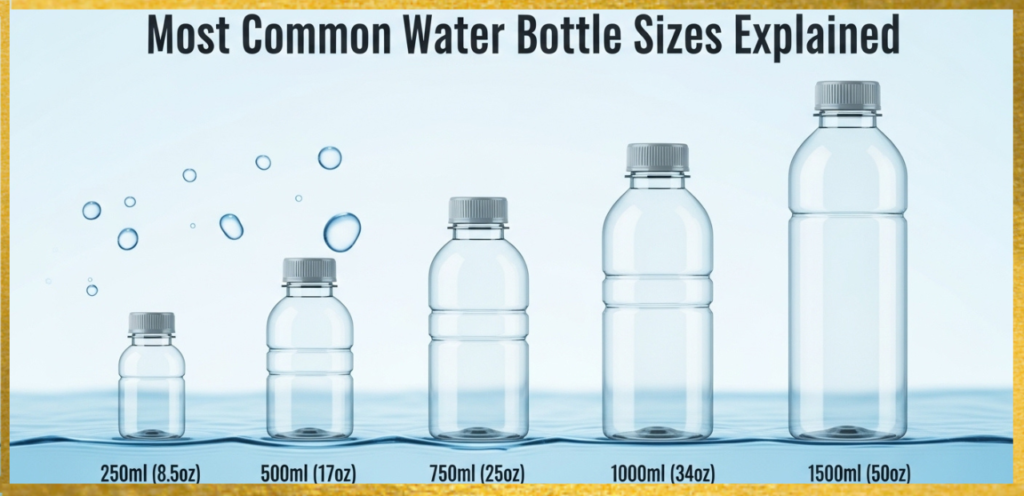
Not every bottle serves the same purpose.
Let’s break them into categories.
Small Bottles (8–16.9 oz)
Small bottles are lightweight and portable.
Best for:
- Children
- Short trips
- Lunch bags
- Quick errands
Advantages:
- Easy to carry
- Fits almost everywhere
- Lightweight
Medium Bottles (20–24 oz)
This range has become the sweet spot for everyday hydration.
Best for:
- Office use
- School
- Daily commuting
Advantages:
- Good balance between size and capacity
- Fits many cup holders
- Less frequent refilling
Large Bottles (32–40 oz)
Fitness enthusiasts often choose these sizes.
Best for:
- Gym sessions
- Outdoor activities
- Long workdays
Advantages:
- Supports hydration goals
- Fewer refills needed
Extra-Large Bottles (64 oz and Above)
These hydration bottles are designed for serious water intake.
Best for:
- Hiking
- Camping
- Sports events
- Extended travel
Advantages:
- Massive capacity
- Excellent for outdoor adventures
500ml Water Bottle Dimensions
The 500ml bottle is one of the most widely used bottle formats in the world.
Height
Average height:
- 8 to 8.5 inches
- 20 to 22 centimeters
Diameter
Average diameter:
- 2.5 to 2.75 inches
- 6.3 to 7 centimeters
Real-Life Examples
A typical 500ml bottle is similar in height to:
- A standard school ruler
- A paperback novel
- A medium-sized flashlight
This size works well because it’s large enough for hydration while remaining highly portable.
1 Liter Water Bottle Dimensions
One-liter bottles provide nearly double the capacity of a standard 500ml bottle.
Standard Measurements
Typical dimensions include:
- Height: 10–11 inches
- Diameter: 3–3.5 inches
These measurements vary depending on bottle design and material.
Practical Uses
A 1-liter bottle works well for:
- Office workers
- Students
- Travelers
- Gym-goers
Many people find a 1-liter bottle strikes the perfect balance between convenience and hydration.
Plastic vs Stainless Steel Water Bottle Dimensions
Material plays a surprising role in bottle dimensions.
Plastic Bottle Sizes
Plastic water bottles usually have thinner walls.
Benefits:
- Larger internal volume
- Lighter weight
- More compact dimensions
Stainless Steel Bottle Sizes
Stainless steel bottles require thicker walls.
Especially insulated bottles.
As a result, two bottles with identical capacities may have noticeably different outer dimensions.
Benefits:
- Better temperature retention
- Greater durability
Glass Bottle Sizes
Glass bottles often feature protective silicone sleeves.
They tend to be:
- Heavier
- Slightly wider
- More fragile
Yet many users prefer them because they don’t retain flavors.
Water Bottle Diameter and Cup Holder Compatibility
One of the most searched questions involves cup holder fit.
And for good reason.
A bottle that doesn’t fit becomes annoying very quickly.
Car Cup Holders
Most vehicle cup holders accommodate bottles with diameters between:
- 2.5 and 3 inches
Anything wider may require a cup holder adapter.
Backpack Side Pockets
Many backpack pockets fit bottles up to:
- 3.5 inches in diameter
Stretchable mesh pockets can handle slightly larger sizes.
Bike Bottle Cages
Standard bike cages are designed for bottles around:
- 2.8 to 3 inches in diameter
Oversized insulated bottles may not fit securely.
Water Bottle Cap Sizes Explained
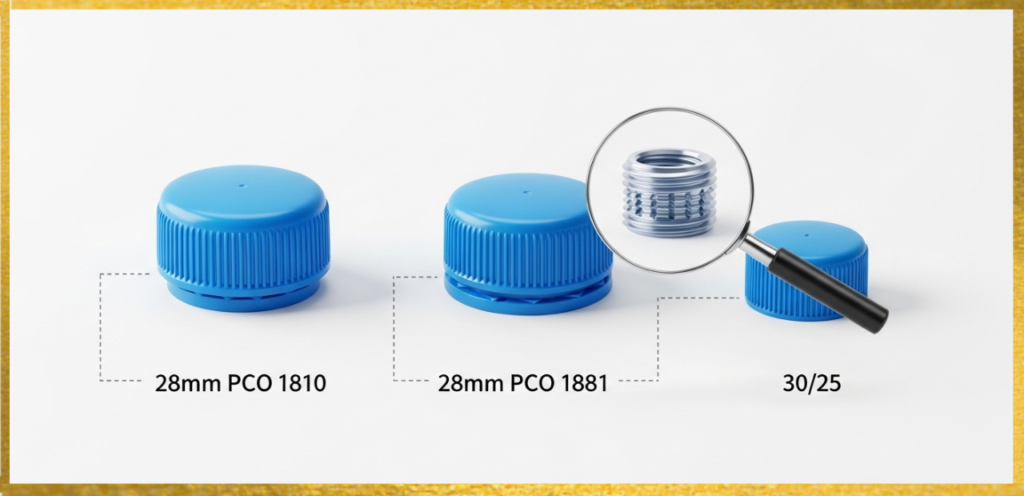
Cap size affects usability more than most people realize.
28 mm Cap
Common on:
- Disposable plastic bottles
- Single-use water bottles
Advantages:
- Leak resistance
- Compact design
30 mm Cap
Often found on:
- Reusable bottles
- Sports bottles
Advantages:
- Faster drinking flow
33 mm Cap
Typically used for:
- Wide-mouth bottles
- Outdoor hydration bottles
Advantages:
- Easy cleaning
- Ice cube compatibility
How to Measure a Water Bottle Correctly
Need precise measurements?
Follow these simple steps.
Measuring Height
- Place the bottle on a flat surface.
- Measure from the base to the highest point of the cap.
- Record the result.
Measuring Diameter
- Measure the widest section of the bottle.
- Use a ruler or caliper.
- Record the measurement in inches or centimeters.
Measuring Capacity
- Fill the bottle completely.
- Pour the contents into a measuring jug.
- Note the volume reading.
This method provides the most accurate bottle volume measurement.
Choosing the Right Water Bottle Size
There isn’t a universal best size.
The right choice depends on how you’ll use it.
For School
Recommended size:
- 16.9 oz to 24 oz
Easy to carry. Fits most backpacks.
For Office
Recommended size:
- 24 oz to 32 oz
Reduces refill trips throughout the day.
For Gym
Recommended size:
- 32 oz to 40 oz
Supports longer workouts.
For Travel
Recommended size:
- 20 oz to 24 oz
Portable and convenient.
For Hiking
Recommended size:
- 40 oz to 64 oz
Provides extended hydration during outdoor activities.
Fun Facts About Water Bottle Dimensions
Water bottles have some surprisingly interesting design history.
Why 16.9 oz Became the Global Standard
A 16.9 oz bottle equals approximately 500 milliliters.
Since the metric system dominates international manufacturing, 500ml became the default size worldwide.
Largest Consumer Bottle Sizes
Some reusable water bottles exceed:
- 1 gallon
- 128 ounces
- 3.78 liters
These giant hydration bottles have become popular among athletes and outdoor enthusiasts.
Interesting Industry Standards
Many manufacturers intentionally keep bottle diameters under 3 inches.
Why?
Cup holders.
Vehicle compatibility heavily influences bottle design.
Frequently Asked Questions
How tall is a standard water bottle?
A standard 16.9 oz (500ml) water bottle is usually 8 to 8.5 inches tall.
What are the dimensions of a 500ml water bottle?
Most 500ml bottles measure approximately 8–8.5 inches tall and 2.5–2.75 inches in diameter.
Why are most water bottles 16.9 oz?
Because 16.9 oz is the U.S. equivalent of 500ml, the global manufacturing standard.
What size water bottle fits a cup holder?
Most car cup holders accommodate bottles with diameters between 2.5 and 3 inches.
How many 16.9 oz bottles make a gallon?
A gallon contains 128 ounces. Dividing 128 by 16.9 gives approximately 7.6 bottles.
What is the most popular reusable bottle size?
The 32 oz reusable water bottle remains one of the most popular choices because it balances portability and hydration capacity.
Frequently Asked Question
how tall is a 16.9 oz water bottle
A standard 16.9 oz (500ml) water bottle is usually 8 to 8.5 inches (20–22 cm) tall. The exact height can vary slightly depending on the brand and bottle shape.
how tall is a water bottle
Most water bottles range from 6 to 12 inches tall, depending on their capacity. Smaller bottles are shorter, while larger reusable bottles can exceed 12 inches.
how much inches is a water bottle
The size of a water bottle varies, but a typical bottle is about 8 inches tall and 2.5 to 3 inches in diameter. Larger bottles may be both taller and wider.
500ml water bottle dimensions
A typical 500ml water bottle measures approximately 8–8.5 inches (20–22 cm) in height and 2.5–2.75 inches (6.3–7 cm) in diameter.
how many centimeters is a water bottle
Most standard water bottles are around 20–22 centimeters tall, while larger reusable bottles can reach 25–30 centimeters in height.
Final Thoughts
Water bottle dimensions aren’t just numbers printed on product packaging. They determine how comfortably a bottle fits in your hand, your backpack, your bike cage, and your daily routine.
Whether you’re comparing a compact 500ml bottle, a versatile 32 oz reusable water bottle, or a massive 64 oz hydration bottle, understanding height, diameter, width, and bottle capacity helps you make a smarter choice.
The next time you’re shopping for a water bottle, don’t look only at ounces. Check the dimensions too. Those extra fractions of an inch often make all the difference.