

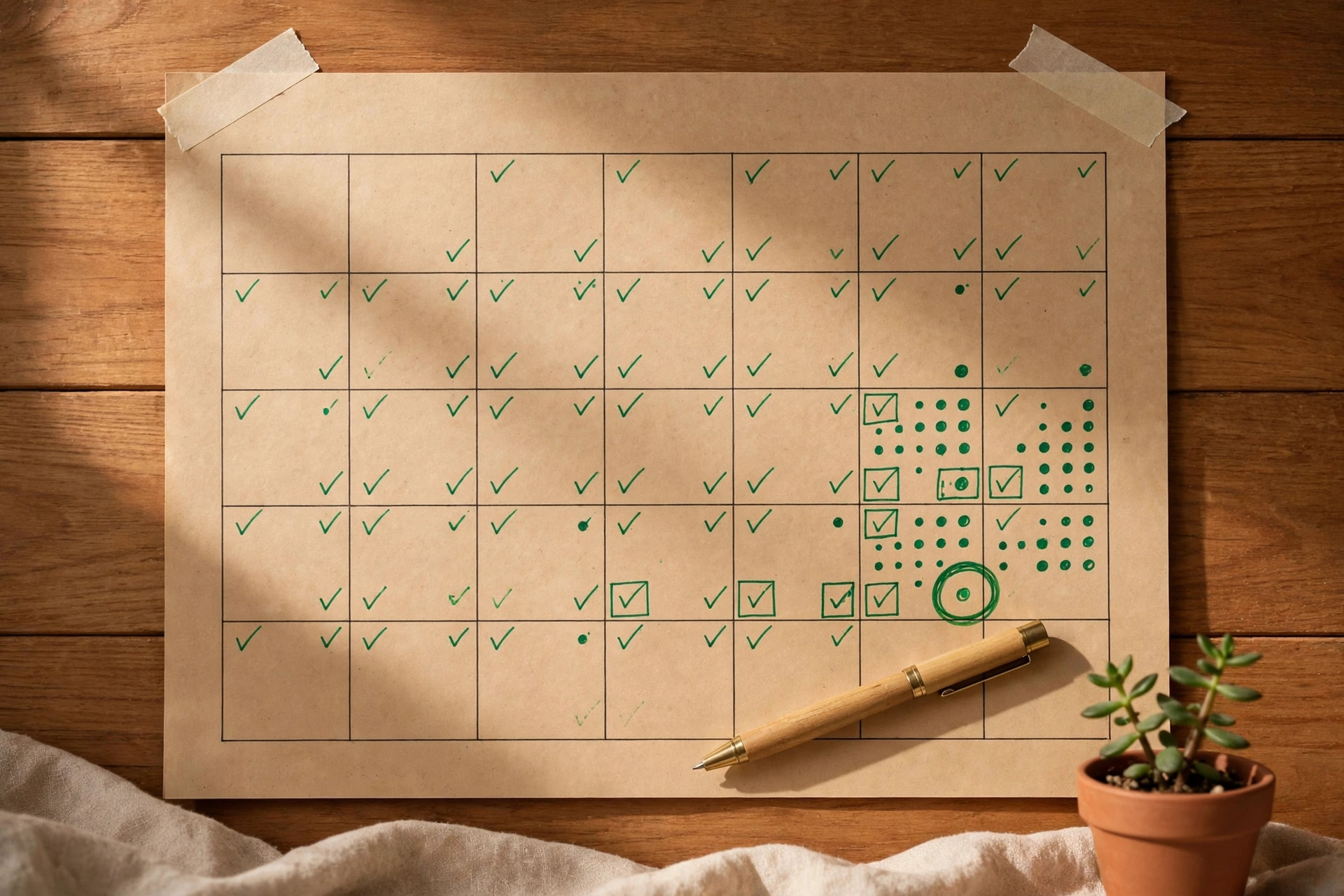
Whether the date is a wedding, an exam, a move, a holiday, or a work deadline, counting down to it is more than watching numbers fall. A good countdown helps you prepare steadily, avoid a last-minute rush, and actually enjoy the build-up instead of dreading it. This guide shows how to plan a countdown that works in real life.
Start With the Date, Written Clearly
Every countdown begins with one clear fact: the target date. Write it down in full, including the day, month, and year, and note whether the date itself is included in your preparation time.
For example, if an event is on Saturday 20 June and you are planning on Monday 1 June, you have 19 days between those dates. Whether you count the event day as a preparation day depends on what needs to happen on that day itself. For a morning event, the day before is usually your last full preparation day.
Ambiguity here causes most countdown mistakes. A countdown that says “20 days to go” means different things depending on whether today is counted. Pick one method and use it consistently.
Work Backwards From the Date
The most reliable way to plan is to work backwards. Start at the event and ask: what must be true the day before? The week before? The month before?
A simple backward plan looks like this:
- On the event day: only final, small tasks — the things that cannot be done earlier.
- The day before: confirmations, packing or setup, and rest.
- The week before: the bulk of remaining tasks, plus a check of anything that depends on other people.
- Two to four weeks before: bookings, orders, and anything with a delivery time.
- Earlier: the big decisions that shape everything else, such as venue, travel, or study plan.
Working backwards prevents the common trap of doing easy tasks first and leaving the slow, dependent tasks until too late. If something needs a week for delivery, it belongs early in the plan, even if it feels less urgent than a task due tomorrow.
Break the Countdown Into Phases
A long countdown feels easier in phases. Instead of one long stretch of “still a long way to go,” divide the time into three parts:
Phase 1: Decide and book
This is the phase for decisions that are hard to change later: dates, venues, travel, major purchases, and the overall plan. Getting these settled early removes uncertainty from the rest of the countdown.
Phase 2: Prepare steadily
This is the longest phase, and the one where steady progress matters most. Set a small weekly goal rather than trying to do everything at once. For an exam, that might be a set number of topics per week. For a move, it might be one room packed per weekend. For an event, it might be one supplier confirmed per week.
Phase 3: Finish and confirm
In the final week, the focus shifts from creating to confirming. Confirm bookings, check lists, prepare what you need for the day itself, and leave space for rest. A good final week is deliberately lighter than the weeks before it, because last-minute problems are easier to handle when you are not already overloaded.
Use Milestones, Not Just a Daily Number
Watching a daily number fall can be motivating at first and discouraging later, especially when progress is uneven. Milestones work better because they mark real achievements.
Choose three or four milestones for your countdown, such as:
- All bookings confirmed.
- Main preparation half done.
- Final checks complete.
- Ready the day before, with nothing essential left.
Each milestone gives you a reason to pause and recognise progress, rather than only noticing how much time is left. Celebrating a milestone briefly — a favourite meal, a walk, a short break — makes the next phase easier to start.
Allow for Delays and Busy Days
No countdown survives contact with real life unchanged. Illness, busy work weeks, delivery delays, and family needs will interrupt even the best plan. A realistic countdown allows for that from the start.
Two habits help:
- Build in buffer days. If you think a task will take three days, allow four in the plan. The extra day is not wasted if you finish early; it becomes rest or a chance to get ahead.
- Keep a short “if I fall behind” list. Knowing in advance which tasks can be simplified, postponed, or dropped makes a delay less stressful. Not every task is equally important, and deciding that calmly beforehand is better than deciding it in a panic.
If you do fall behind, do not try to catch up by doubling the work in one day. Spread the catch-up over several days, and cut the least important tasks first. A slightly simpler event, well prepared, is better than an ambitious one finished in exhaustion.
Countdowns for Different Kinds of Dates
Exams and study deadlines
For study, a countdown works best when it is tied to topics, not just days. Divide the material into weekly blocks, leave the final week for review rather than new material, and include rest days. A study plan without rest days usually collapses before the exam.
Moves and travel
For a move or trip, the countdown should be tied to physical tasks: bookings, packing, address changes, and travel documents. Make a room-by-room or bag-by-bag list, and finish packing the least-used items first. Keep essentials for the final day in one clearly marked place.
Celebrations and events
For celebrations, the countdown should protect enjoyment, not just logistics. Schedule the fun parts — choosing food, music, or decorations — alongside the practical tasks, and keep the day before the event as free as possible. An event you are too tired to enjoy has missed its purpose.
Work deadlines
For work, share the countdown with anyone who depends on you. A deadline that only you know about is fragile. When others can see the milestones, they can offer help or adjust their own plans in time.
Keeping Motivation Steady
Motivation naturally rises and falls during a long countdown. Early enthusiasm fades, the middle feels slow, and urgency returns near the end. Planning for that pattern helps:
- In the early phase, use the enthusiasm to make the hard decisions.
- In the middle phase, rely on routine rather than motivation: a fixed weekly time for preparation beats waiting to feel inspired.
- In the final phase, use the natural urgency, but guard rest. The last week is not the time to start major new tasks.
If the countdown is shared with others, a brief weekly update — what is done, what is next — keeps everyone aligned without daily pressure.
Frequently Asked Questions
How far ahead should I start a countdown?
As early as the biggest decisions require. For simple events, a few weeks may be enough. For anything involving bookings, travel, or large preparation, start as soon as the date is fixed, even if the early steps are small.
Should I count today in “days to go”?
Either method works, as long as you are consistent. The clearest approach is to count full days remaining before the event day, and to state the event date alongside the count so there is no ambiguity.
What if the date changes?
Recalculate from the new date and adjust the phases, rather than trying to squeeze the old plan into the new timeline. If the new date is earlier, cut the least important tasks first.
How do I avoid a last-minute rush?
Work backwards, confirm rather than create in the final week, and build in buffer days. A countdown that ends with rest built in is a sign the plan worked.
Can I plan a countdown for a date months away?
Yes. For a date months away, set monthly milestones, review progress each month, and keep the detailed weekly plan for the final month, so the long countdown stays manageable.
Key Takeaways
- Write the target date in full and decide how you count the days.
- Work backwards from the event, placing slow and dependent tasks early.
- Divide the countdown into decide, prepare, and finish phases.
- Use milestones to mark real progress, not just falling numbers.
- Build in buffer days and a plan for falling behind.
- Keep the final week for confirming and resting, not for starting major tasks.
A good countdown does not just measure time until an important date. It turns that time into steady preparation — so that when the date arrives, you are ready, rested, and able to enjoy it.
A Simple Countdown Checklist You Can Reuse
A good countdown planner does not need to be complicated. Start with one page, one event countdown, and one clear list of days remaining. Write the date at the top, then list the tasks underneath in the order they must happen.
Use a short task checklist for each week, rather than one long list for the whole period. A weekly list is easier to check, easier to share, and easier to adjust when plans change. Tick off completed tasks promptly, so the remaining work stays visible.
For deadline planning, set a review point at the end of each week. Ask three questions: what is done, what is next, and what needs help from someone else. This short review stops small delays from growing into a last-minute problem.
Good time management also means protecting rest and buffer time. Do not fill every day to the edge. Leave one lighter day each week, keep the day before the event as free as possible, and remember that a calm finish is part of a successful countdown.
Read next: What Is a Leap Second and Why Timekeeping Needs It